Skip to content
BridgeportGarage Door ExpertsOpen 24/7 (226) 806-0514
Illustrative garage doors scene — Stanley Park

Openers · Stanley Park

Emergency Release Repair

It is the coldest morning of the year. A week of slush and road salt has crusted over the outside release lock, the key will not seat, and the opener inside is silent after the overnight outage.

In plain words

The visit runs in a fixed order. On the phone you describe what the release did, where the door was, and what kind of opener hangs from the ceiling. On site the door is closed or safely supported before anything else. The release assembly is inspected from handle to trolley, the door is disconnected and lifted by hand to check its balance, and the failed part is replaced with one that fits the model. The handle is set to the right height, the trolley is reconnected with the door closed, and the opener runs full cycles and both reversal tests. It ends with a demonstration on your own door.

Sound familiar?Stanley Park

The call
The power went out in the middle of an ice storm, the car is inside, and when you reach up for the red handle there is nothing there. A frayed stub of cord hangs from the trolley, well above your fingertips, and the door sits shut.
NextHow the visit goes

Emergency Release Repair · Stanley Park

How the visit goes

Illustrative garage doors scene — Stanley Park
  1. Scene 1

    Reading the release as a chain of parts

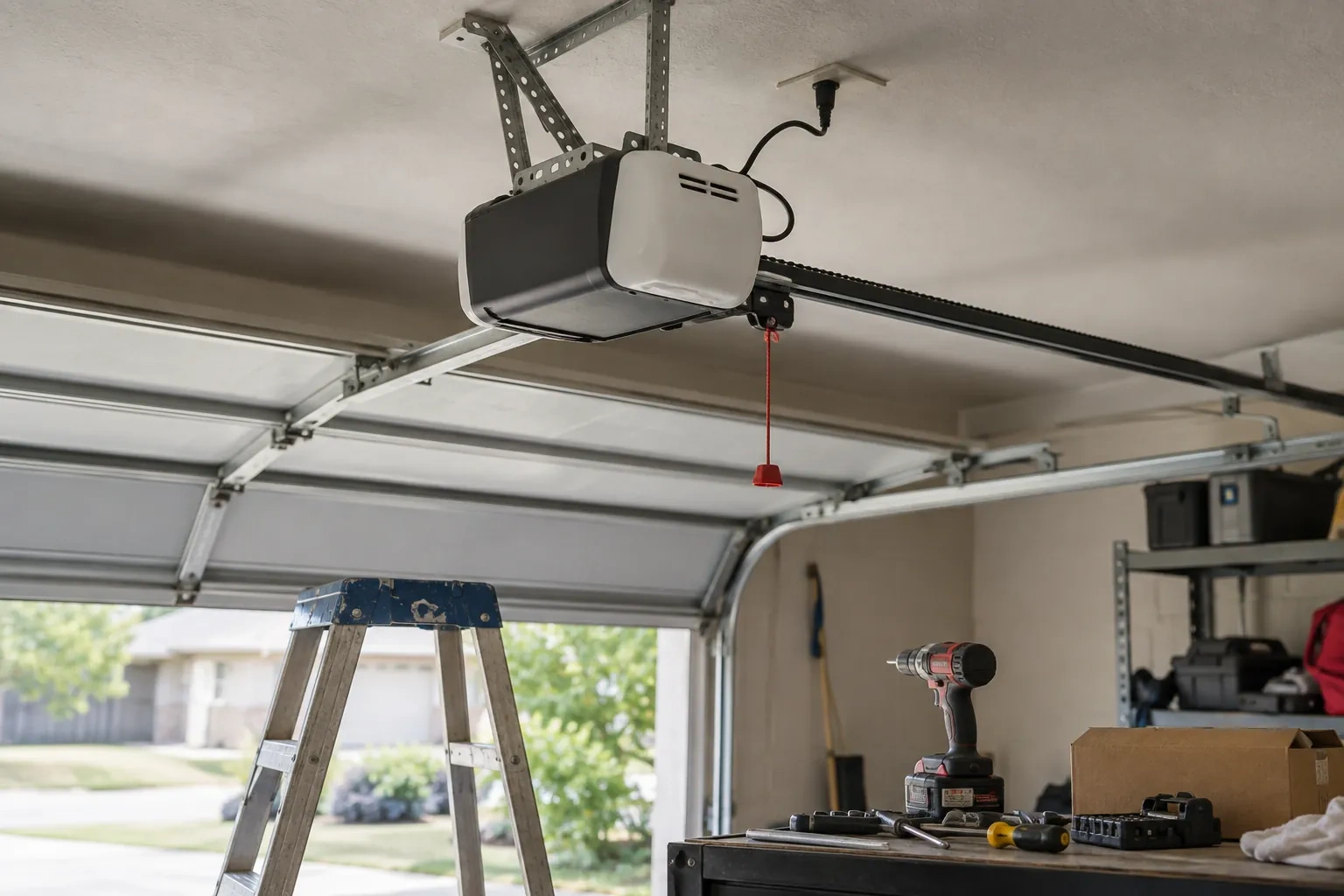
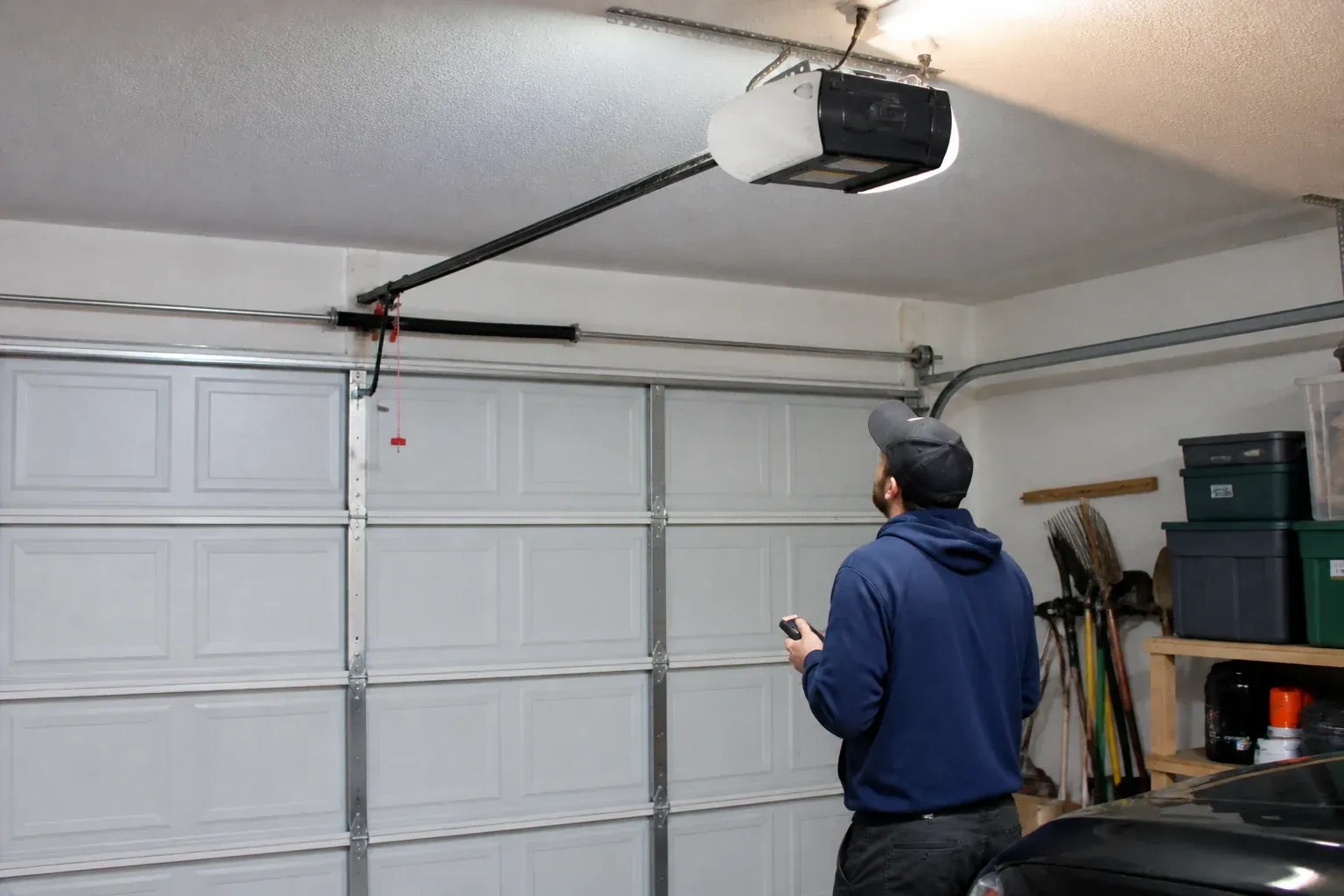
    With the door settled, the release is inspected link by link rather than as a single handle. The cord: frayed, knotted, sun-rotted or cut short. The handle: present, red, and the right shape to grip. The lever on the trolley: does it swing fully to the release position and snap back, or is it bent, sticky or missing its spring. The trolley and carriage: are the latch surfaces worn, is the body cracked, is the arm to the door straight. The stops at either end of the rail: has the trolley been driven into one. Each link is checked so the repair replaces what failed rather than the part nearest to hand.

  2. Scene 2

    Replacing the trolley or carriage

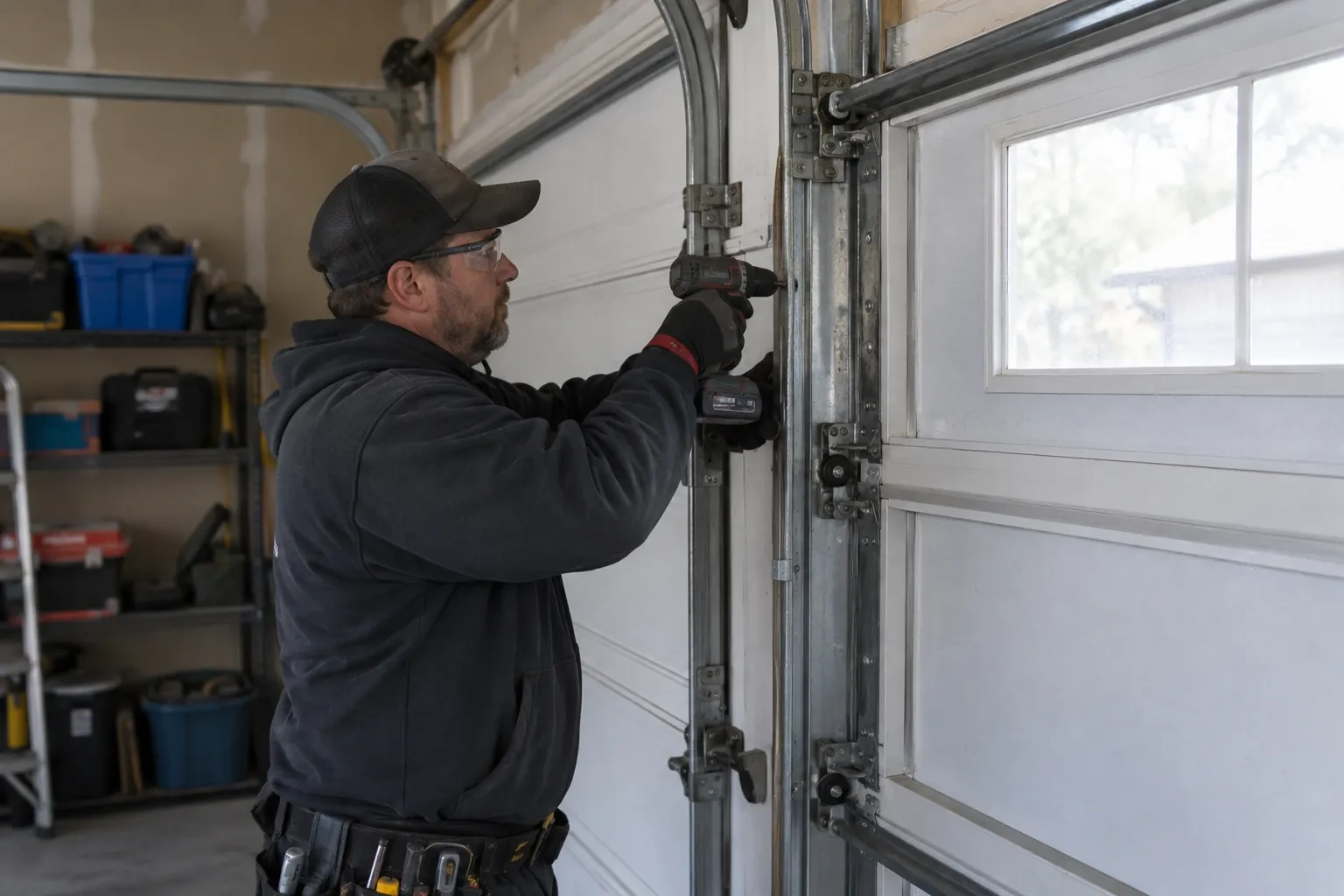
    Latch teeth that have worn round, a cracked trolley body or a carriage bent when a door dropped onto it call for a new assembly. The technician slackens the drive, disconnects the arm from the door, slides the old trolley off the rail and fits the replacement that matches the opener's model and rail type, then reattaches the arm with new clevis pins and clips. The chain or belt is set to the correct tension, the trolley is run to the door and latched, and the opener is cycled until the technician is satisfied the connection is solid at both ends of travel. Old parts are shown to you before they leave.

  3. Scene 3

    Battery backup and outage-prone streets

    If your street loses power a few times each winter, the technician may raise battery backup. Modern openers can carry a battery that opens and closes the door on stored power, which spares you the release altogether in most outages. The battery is a wearing part, generally replaced every few years, and the head unit signals when it is tired. The release remains the fallback when the battery is flat or the opener itself has failed, which is why both are kept in working order. You leave knowing which of the two your household relies on and how each one is checked.

In the van

  • Hole saw for the top section
  • Trolley and carriage assembly
  • Door arm, clevis pins and clips
  • Rope and red handle kit
  • Release cable and clips

What shapes the quoteBridgeport Garage Door Experts

Freeing versus replacing the trolley
A trolley jammed on the stop bolt is freed, adjusted and reused when its latch is sound. One with worn teeth or a cracked body is replaced, which changes both parts and labour.
Damage from a door that dropped
A release pulled on an unbalanced open door can bend the arm, the carriage, a bracket or a panel. Anything that took the impact is listed on its own once it has been seen.
Battery backup as an option
If outages are the reason you called, a battery backup pack for a compatible opener may be offered alongside the release repair. It is optional and appears as its own item.

FeesSame any hour

Have it ready

Before you call · 0 / 3

(226) 806-0514

Ask us anything

My door lets go of the opener partway through travel. Why?

A release lever that is only half-latched will hold until the door's weight shifts, then drop out. That points to a weak or missing lever spring, a bent lever, or worn latch teeth on the trolley. It can also follow a hard pull on the cord that left the lever cocked. The fix is a new spring or lever, or a new trolley, and a check that the door is balanced so the trolley is not carrying more than it should.

Why are the reversal tests done after a release repair?

Because freeing a trolley, changing a trolley or re-tensioning a chain or belt disturbs the travel limits and force settings the opener relies on. The tests prove those settings are still safe: closed onto a 2x4 lying flat, the door must reverse on contact; with something passed through the photo-eye beam while closing, it must stop and rise. They take a minute and are the same checks the standard asks of any working opener.

The door is stuck shut, the opener is dead and there is no other door. Can you still get in?

Usually. If the door has an outside key release, a small round lock near the top panel, that is what it is for: the key pulls a cable that frees the trolley from outside so the door can be lifted by hand. If there is no such release, the technician has other methods to reach the lever from outside, and once inside the fault is dealt with. Fitting an outside release afterwards is a sensible follow-up for a garage with a single door.

Stanley Parkinformation

WaterlooOntario

Emergency Release Repair · Kitchener, Bridgeport, Heritage Park, Rosemount

Town
Stanley Park, Waterloo
In business
24 years
Hours
Open 24/7
Nights, weekends and holidays, same fees
Visits
On-site assessment preferred. Request a visit or call.

2021 census: what it means at the door

Every square is one home in a hundred.

  • 49 in 100 homes · mixed ages
  • About 49% of homes in Kitchener were built in 1980 or earlier, according to the 2021 Census.Where housing ages are mixed, many older houses have already had a newer door and opener fitted, so the door's age and the house's age are not the same thing. The technician reads the door itself, its spring type, tracks and opener, before recommending anything.
  • Single-detached houses make up about 48% of homes in Kitchener (2021 Census).Where housing is varied, security needs vary too. A detached home wants its garage door closing fully and its interior door respected; a townhouse or condo wants old fobs and remotes cleared and the shared entrance working. We address whichever applies at each door.

Source: Statistics Canada, Census Profile

Open Stanley Park in Google Maps

On-site assessment

Request a visit.

It is the coldest morning of the year.

(226) 806-0514, open 24/7.