Skip to content
BridgeportGarage Door ExpertsOpen 24/7 (226) 806-0514
Illustrative garage doors scene — Extension Spring Replacement, Kitchener

Springs · Kitchener

Extension Spring Replacement

It is the first hard frost of the year and the door on the old detached garage has stopped halfway, squealing at one pulley. The springs are the ones that came with the door decades ago, orange with rust where they hang near the back wall.

In plain words

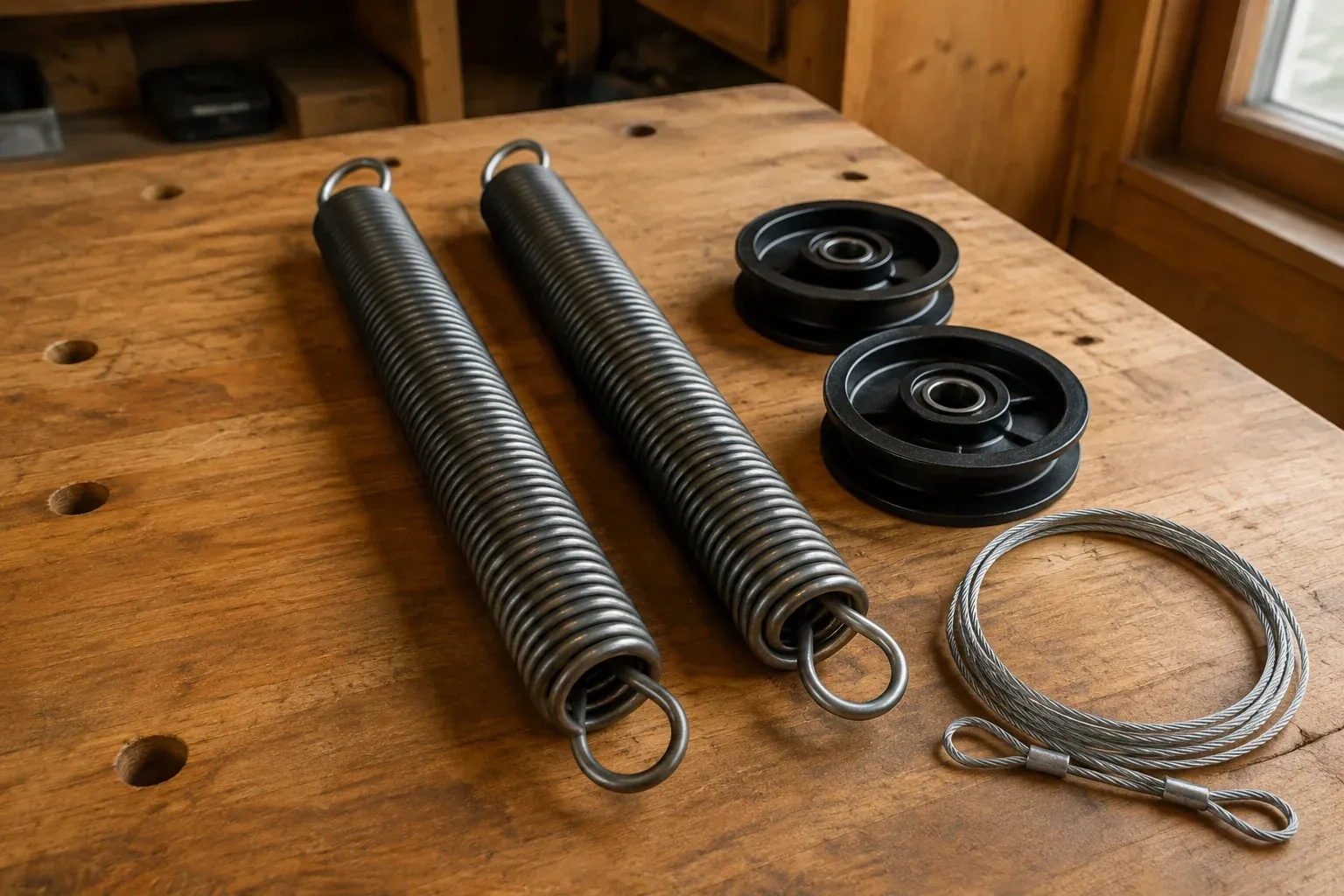
When one extension spring breaks, the other is replaced with it. The two springs were fitted together, have stretched the same number of times and have rusted in the same air, so the survivor is near the end of its life. More importantly, a door balances only when both sides pull equally; a new spring paired with a tired one lifts one corner ahead of the other and twists the door. Fitting a matched pair rated for the door's weight lets the technician set both sides to the same hook position and hand back a door that rises level and holds where it is left.

Sound familiar?Kitchener

The call
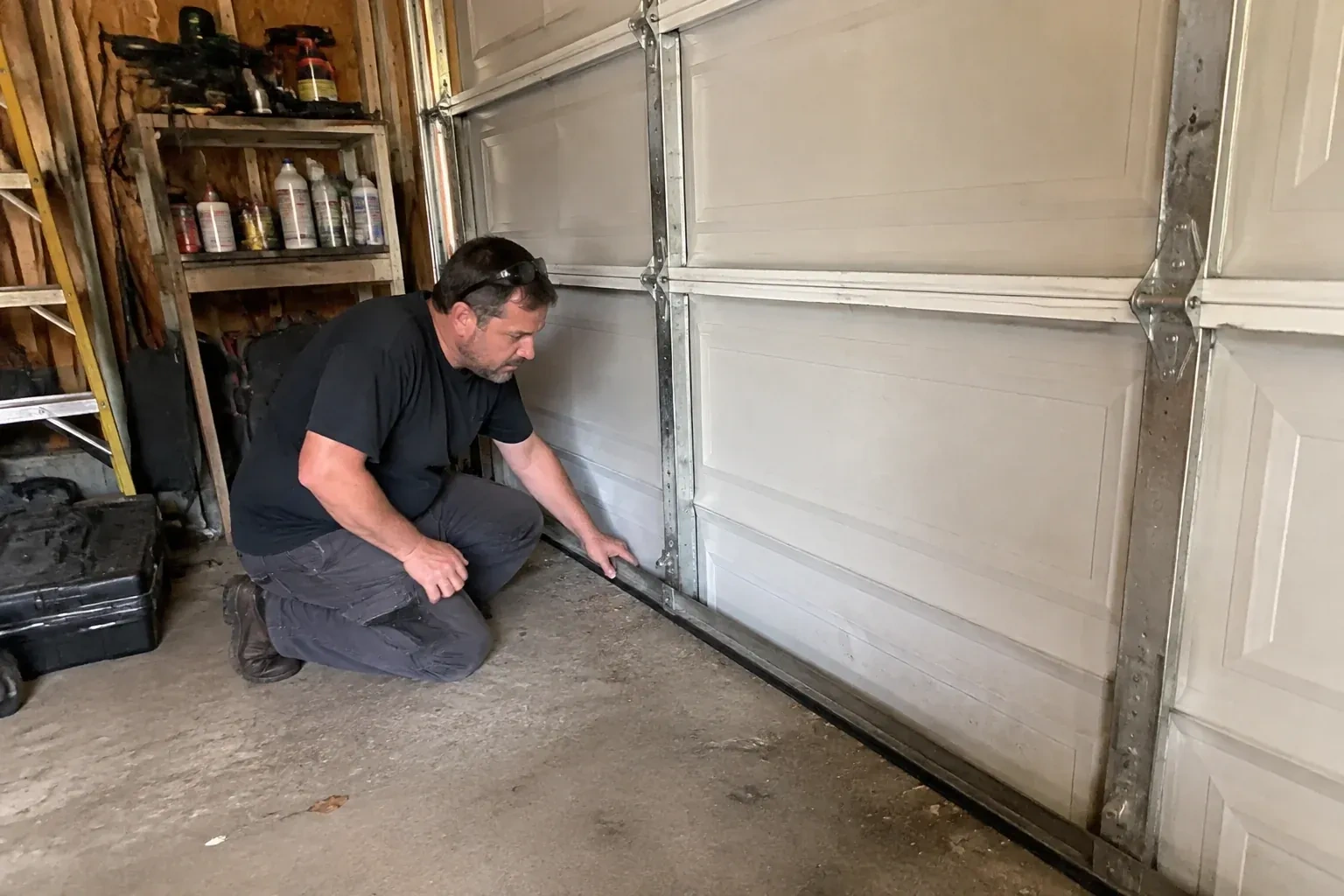
The door climbs with the left corner ahead of the right, then twists as it turns into the ceiling track. Looking up, the spring on the right side is stretched longer than its partner, with daylight showing between the coils.
NextHow the visit goes

Extension Spring Replacement · Kitchener

How the visit goes

Illustrative garage doors scene
  1. Scene 1

    Hangers, brackets and what they are screwed into

    Extension springs pull against whatever holds their back end, usually an angle-iron hanger bolted to the rear track support or lag-screwed into a ceiling joist. The technician checks that this anchor is tight, that the lag screws bite into wood rather than drywall or a split joist, and that the hanger has not bent under years of load. The bracket that carries the fixed pulley at the front of the track is checked the same way, along with the bottom brackets on the door that the lift cables pull on. An anchor that has loosened lets the spring's geometry drift, which is one reason a door slowly becomes uneven.

  2. Scene 2

    Threading the containment cables

    Before a spring is hung, a containment cable is fed through the centre of its coil. One end is anchored at the rear, to the hanger or the framing behind it, and the other is run forward past the pulley and fixed to the bracket at the front of the track or to the wall, with enough slack that the cable never carries load while the spring works. The cable is checked to be clear of the pulley wheel and the lift cable so nothing rubs. Both sides are done the same way, whether or not the old installation had them. A spring that breaks in future is held on the cable rather than crossing the garage.

  3. Scene 3

    Containment cables, and leaving them be

    Your door now has a cable running through the middle of each spring, anchored at the back hanger and at the front of the track. It carries no meaningful load while the springs work, though a trace of slack as the door cycles is normal. Its job begins only if a spring ever breaks, when it holds the pieces on the cable instead of letting them fly. It should not be removed, used to hang anything, or tied back to the wall. If it ever looks badly slack, frayed or pulled from its anchor, call to have it corrected promptly rather than waiting for a routine visit. A home inspector looks for this cable when a house is sold.

In the van

  • Pulleys (sheaves) and forks
  • Lag screws and hanger bolts
  • Containment (safety) cables
  • Lift cables
  • Bottom brackets and clevis pins

What shapes the quoteBridgeport Garage Door Experts

Condition of the lift cables
Cables with fraying, rust at the loop or a kink are renewed as a pair while the springs are off. Sound cables are re-routed and set, and the quote says which applies.
Hangers and anchor points
A rear hanger that has loosened, a front bracket bent by a jumped cable, or framing that needs a new anchor point adds fasteners, angle iron and a little time.
Working room around the springs
Shelving, a stored canoe or a car parked under the tracks slows the work along the horizontal run. Clearing the sides of the garage beforehand keeps the time on the quote short.

FeesSame any hour

Have it ready

Before you call · 0 / 3

(226) 806-0514

Ask us anything

Can I use the door as soon as the work is done?

Yes. The last steps of the visit are the balance test by hand, several full cycles under power and the opener's reversal checks, so the door is ready for normal use when the technician leaves. New springs need no settling period. It is worth running it yourself once or twice while the technician is still there, so you know what a properly balanced door sounds and feels like from now on.

Could I switch to torsion springs instead of replacing the extension ones?

Sometimes, and it is worth asking. A torsion system needs room above the door opening for its shaft and a header that can carry the spring bracket, which many older garages with a low ceiling simply lack; extension springs are there for that reason. Where the headroom exists, a conversion is a separate job with its own hardware and quote. The technician can tell you on the spot which route suits your garage.

Only one spring broke. Why replace both?

The two springs are the same age and have stretched the same number of times, so the one still hanging is close behind. There is also a balance reason: a door lifts level only when both sides pull equally, and a new spring beside a worn one lifts its corner first and twists the door. Fitting a matched pair sets both sides the same and avoids a second visit a few months on.

Kitchenerinformation

WaterlooOntario

Extension Spring Replacement · Bridgeport, Heritage Park, Rosemount, Stanley Park

Town
Kitchener, Waterloo
In business
24 years
Hours
Open 24/7
Nights, weekends and holidays, same fees
Visits
On-site assessment preferred. Request a visit or call.

2021 census: what it means at the door

Every square is one home in a hundred.

  • 49 in 100 homes · mixed ages
  • About 49% of homes in Kitchener were built in 1980 or earlier, according to the 2021 Census.A blend of older and newer homes usually means a blend of expectations too: keeping an original door running as long as sensible, or bringing a builder-grade door up to a quieter standard. Both are worthwhile, and the choice is explained at the door with the options side by side.
  • Single-detached houses make up about 48% of homes in Kitchener (2021 Census).Where housing is mixed, the doors are mixed as well: wide insulated doubles, narrow singles in rows and the occasional rolling door on a small commercial unit at the corner. Spring type, cable length and opener strength are matched to each door individually.

Source: Statistics Canada, Census Profile

Open Kitchener in Google Maps

On-site assessment

Request a visit.

It is the first hard frost of the year and the door on the old detached garage has stopped halfway, squealing at one pulley.

(226) 806-0514, open 24/7.