Skip to content
BridgeportGarage Door ExpertsOpen 24/7 (226) 806-0514
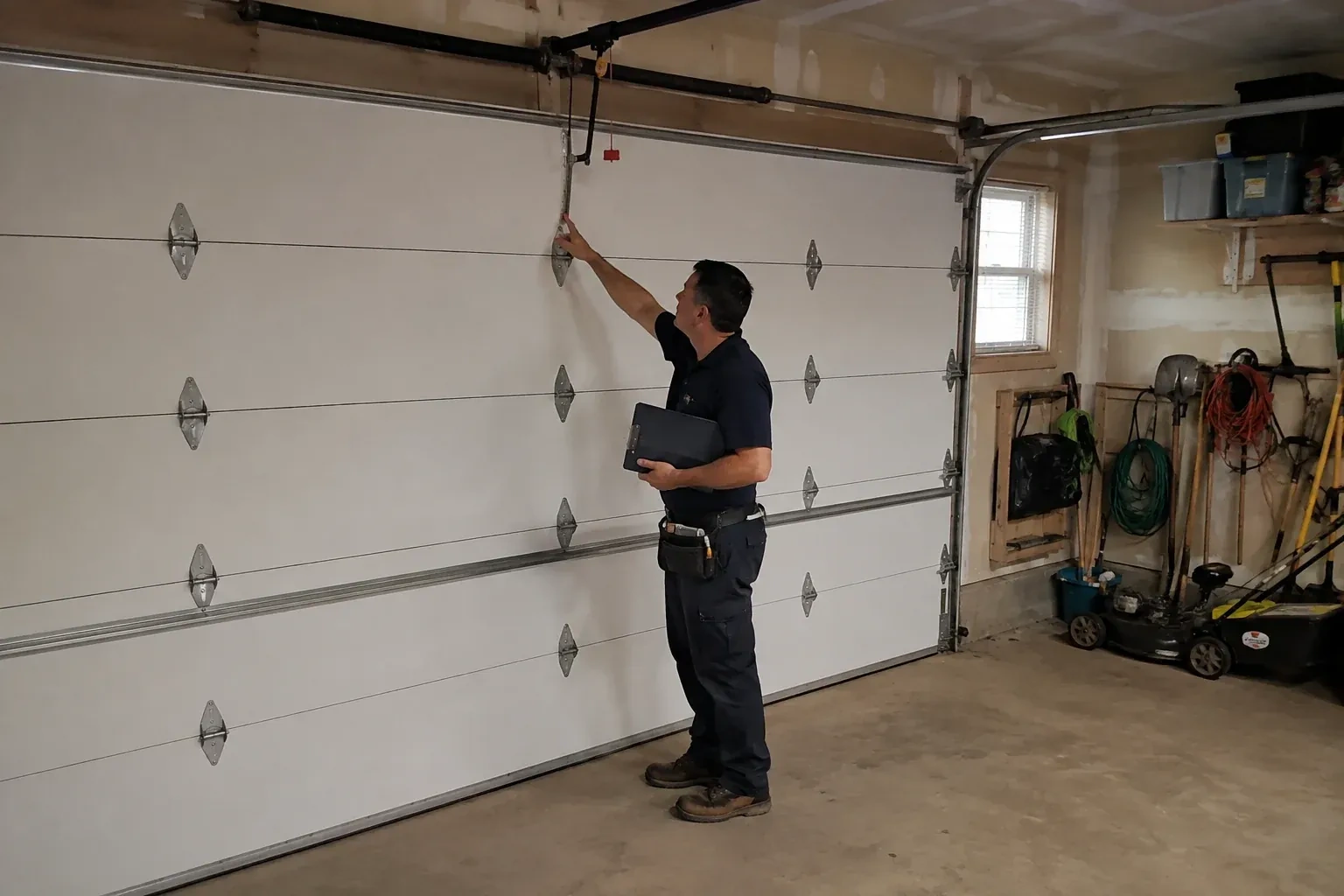
A person holding a clipboard examines the interior hardware of a closed garage door. — Garage Door Tune-Up, Rosemount

Repairs · Rosemount

Garage Door Tune-Up

You moved in a few months ago and have no idea when the garage door was last looked at. The previous owners left the remotes on the counter and no paperwork, and the door works, but it works loudly and unevenly.

In plain words

A noisy garage door is a door asking for a small amount of attention. Squeaks usually come from dry hinge pins and roller bearings. A rattle is often a hinge screw or track bolt that vibration has backed out. A grinding or popping sound can be a roller worn out of round, or a chain slapping the opener rail. A tune-up goes through these one at a time, tightening, lubricating and adjusting, and separates the sounds that maintenance settles from the ones that point to a worn part. The result is a door your neighbours stop noticing, and a clear list if something needs replacing.

Sound familiar?Rosemount

The call
Every morning the door announces itself to the whole street: a long metallic squeal as it climbs, a rattle at the top, and a groan on the way back down. It still opens and closes, but it never used to sound like this.
NextHow the visit goes

Garage Door Tune-Up · Rosemount

How the visit goes

Illustrative garage doors scene — Rosemount
  1. Scene 1

    Seals, weatherstrip and the threshold

    The bottom seal is checked along its whole length for tears, flattening and stiffness, and the threshold is looked at for the low spots where water pools and freezes. The jamb and header weatherstrip are pressed to see whether the rubber or vinyl still flexes or has gone hard, and the technician notes any daylight showing when the door is closed. Because the opener's travel limit decides how firmly the door presses onto its seal, the two are read together: a crushed seal often means the down limit is set too far, and a gap often means the door is stopping early. This part of the check matters most before winter.

  2. Scene 2

    Rollers and hinges that have earned attention

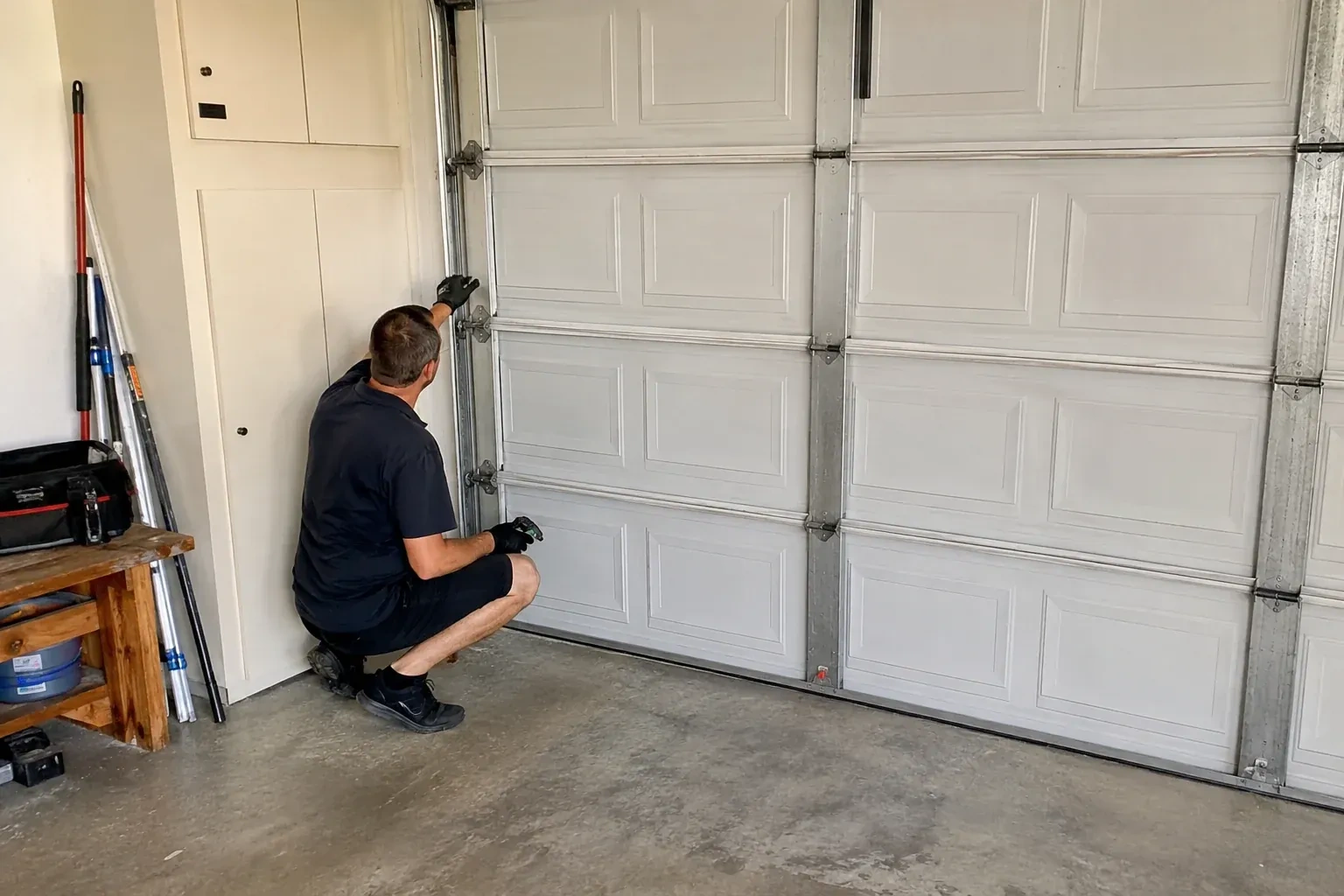
    Sometimes the inspection finds a roller with a flat spot, a bearing that grinds even when lubricated, or a hinge with a cracked knuckle, and these are the small parts that make a door loud and rough. Where the customer agrees, a worn roller or hinge on the middle sections can be changed during the visit: the door is clamped to the track so it cannot move, the hinge is unbolted, the roller stem is drawn out and the new part goes in with fresh fasteners. Rollers at the bottom section stay with the tension-bearing hardware and are handled separately. Even a single replaced roller can remove the loudest sound in the cycle.

  3. Scene 3

    Two safety tests you can repeat every month

    You leave knowing how to run the same two tests the technician ran. With the door open, start it closing and wave a broom handle through the photo-eye beam: the door should stop and return fully open. Then lay a 2x4 flat on the floor under the centre of the door and close it: the door should reverse when it touches the board. Manufacturers ask for both tests monthly and after any adjustment. A door that stops on the board rather than reversing needs its down travel or force reset, which the record explains, and a door that fails again is a reason to call. The tests take two minutes and are the heart of a safe opener.

In the van

  • Photo-eye brackets and wire
  • Replacement steel or nylon rollers
  • Bottom seal (astragal)
  • 2x4 test block and tape measure
  • Jamb and header weatherstrip

What shapes the quoteBridgeport Garage Door Experts

Number of doors
Two or three doors on the same property are usually serviced in one visit, and the second and third door are quoted at a different rate from the first because the travel is shared.
Bottom seal and weatherstrip
Treating existing seals is part of the tune-up; replacing a torn bottom seal or renewing hardened jamb weatherstrip is additional material and time, quoted by the length involved.
Season and weather
A winter visit can include freeing a seal frozen to the slab and working with thickened lubricant before the tune-up proper can begin, which adds time to the visit.

FeesSame any hour

Have it ready

Before you call · 0 / 3

(226) 806-0514

Ask us anything

How long does a tune-up take?

For a single or double residential door with an opener, allow roughly an hour to two hours on site. The inspection and the two observed cycles take a fixed amount of time; the rest depends on how many fasteners have loosened, whether the sensors need realigning and whether you approve a small part replacement, such as a worn roller, during the same visit. Spring or cable work, if found necessary, is scheduled as its own job.

How do I test the safety reversal at home?

Two tests, once a month. With the door open, press close and wave a broom handle through the photo-eye beam near the floor: the door should stop and go back up. Next, set a 2x4 flat on the concrete in the middle of the opening and press close: the door must reverse when it meets the board. If it stops on the board without reversing, the down travel or force setting needs adjustment, and if it fails after that, book a visit.

What kind of doors and openers do you service?

Residential sectional doors of every common construction: steel, insulated steel, aluminum and glass, wood and composite, single and double width, with torsion springs above the header or extension springs beside the horizontal tracks. Openers of all the usual types are covered too, including chain drive, belt drive, screw drive and wall-mounted jackshaft units. If the door is a one-piece tilt-up or a commercial rolling door, mention that when booking so the right hardware comes along.

Rosemountinformation

WaterlooOntario

Town
Rosemount, Waterloo
In business
24 years
Hours
Open 24/7
Nights, weekends and holidays, same fees
Visits
On-site assessment preferred. Request a visit or call.

2021 census: what it means at the door

Every square is one home in a hundred.

  • 49 in 100 homes · mixed ages
  • About 49% of homes in Kitchener were built in 1980 or earlier, according to the 2021 Census.A neighbourhood with homes from several decades means a technician meets both generations of garage door in a single day: extension-spring wood doors next to steel sectionals on torsion hardware. The van carries parts for both so either kind of door is repaired on the first visit.
  • Single-detached houses make up about 48% of homes in Kitchener (2021 Census).Mixed housing brings mixed garage use: workshops and storage in the detached homes, everyday parking and a tight squeeze in the attached ones. Sealed rollers and protected sensors suit the busy workshop door; a quiet opener and a well-balanced door suit the townhouse.

Source: Statistics Canada, Census Profile

Open Rosemount in Google Maps

On-site assessment

Request a visit.

You moved in a few months ago and have no idea when the garage door was last looked at.

(226) 806-0514, open 24/7.