Sound familiar?Heritage Park
- The call
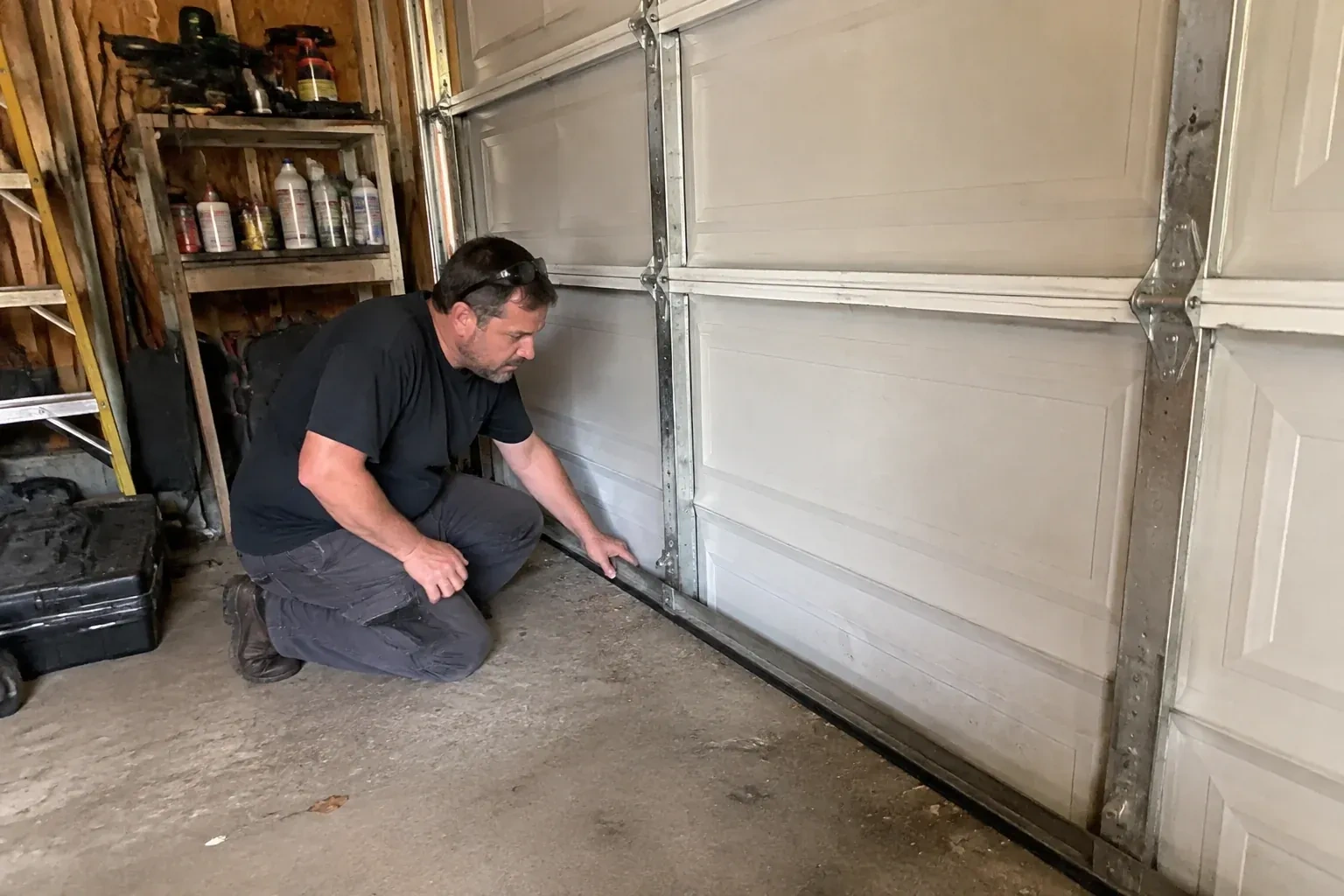
- Watching from inside as the door opens, you can see the gap between the second and third panels open up on one side as they turn the corner into the ceiling, then close again. The other side stays tight.
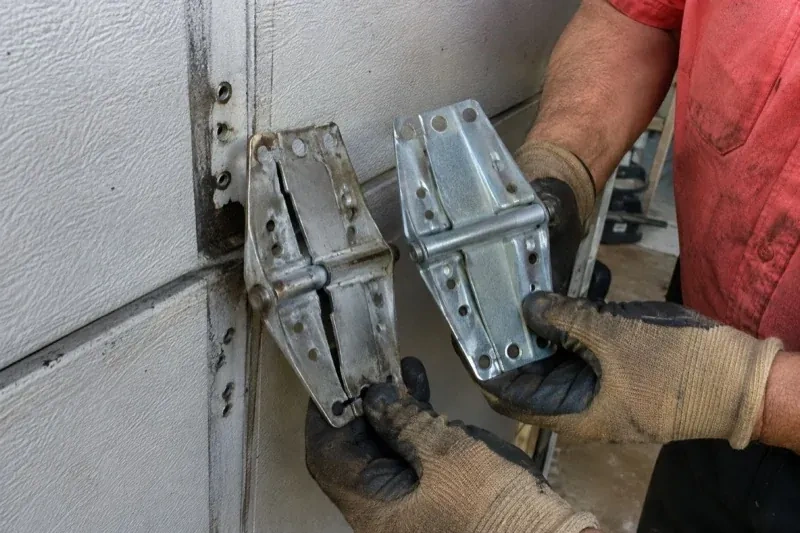
The hinge is only as good as what it is screwed to. On a steel door the screws bite into the stile, a folded steel channel at the panel edge, sometimes with a support plate behind it; on a wood door they thread into timber. Years of vibration back screws out, and once a hole is stripped the hinge rocks and the joint loosens. Hinge replacement includes fresh fasteners, and where holes have opened up the technician shifts to sound metal, steps up to a larger self-drilling screw, or bolts through the panel with a nut and washer or a backer plate. The new hinge then stays put.
Sound familiar?Heritage Park
Garage Door Hinge Replacement · Heritage Park
Scene 1
With the door still closed, the technician checks how it sits against the opening: does the door press evenly against the jambs on both sides, is there daylight at one edge, and do the panels line up flush with each other? Then the vertical tracks are checked for plumb, spacing from the door face and secure brackets, and the curve is examined for a smooth run. This matters because hinge numbers and track angle work together; a hinge of the wrong number, or a track that has crept, shows up here before the door moves. It also gives a baseline to compare against once the new hinges are on.
Scene 2
When a bumper or a bin has hit the door, the hinge is often bent along with the stile behind it. The technician removes the damaged hinge, straightens the stile with a dolly or fits a support plate where the steel has creased, and checks that the panel edges no longer touch when the joint flexes. A strut is added or straightened if the panel has bowed. The new edge hinge goes on with its roller, and the door is run through the curve by hand to confirm the panels turn without rubbing. Where a section itself is buckled, that is discussed as a separate decision.
Scene 3
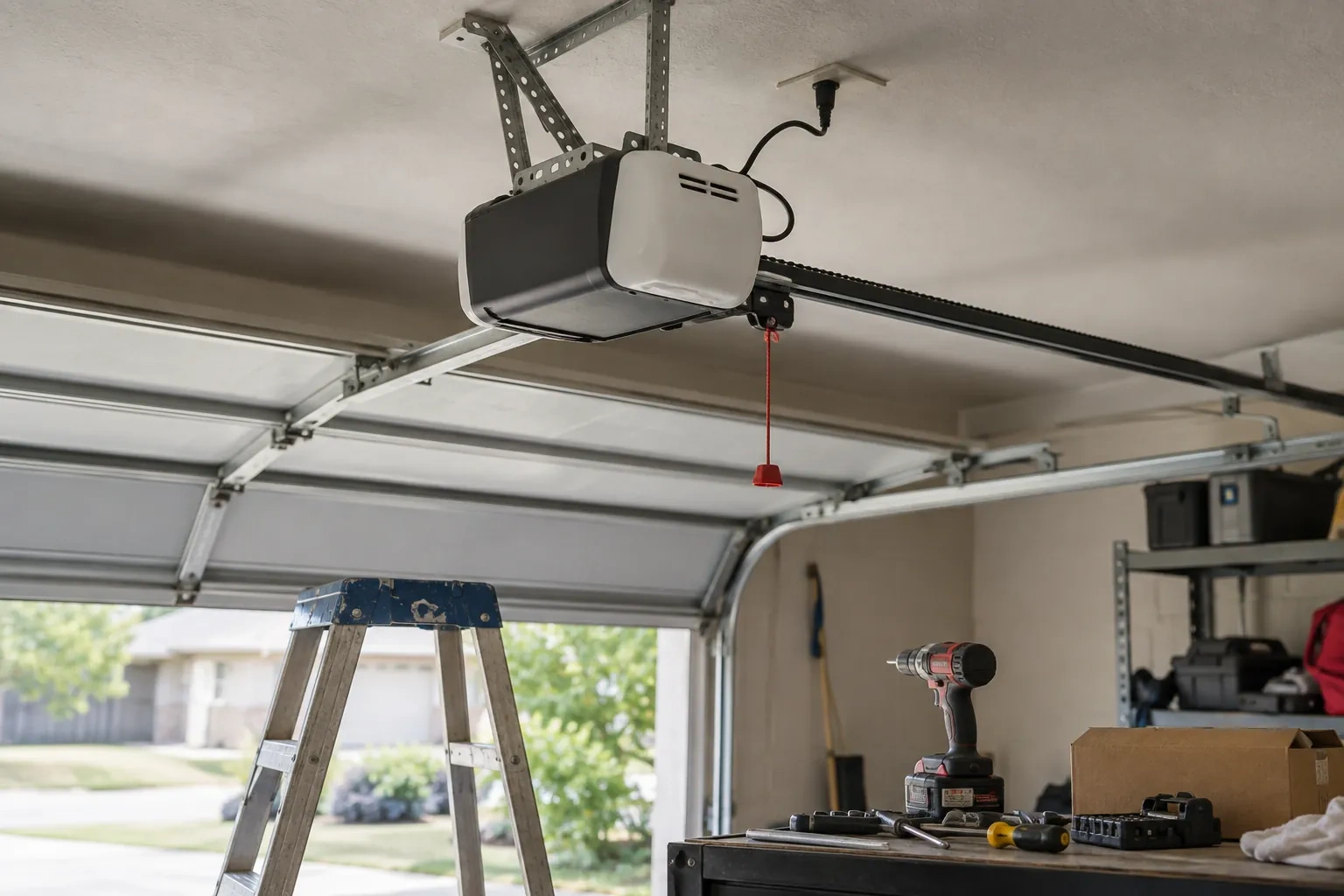
You can confirm the door is balanced without touching a spring. With the door closed, pull the opener's release cord, lift the door by its handle to about waist height and let go gently. It should stay roughly where it is. A door that sinks or climbs on its own is telling you the springs are out of step with the door's weight, and a door dragged by the opener is what wears hinges early, so book an adjustment. Reconnect the opener the way its manual describes, usually by running it once. Doing this each season keeps both the hinges and the opener working lightly.
What shapes the quoteBridgeport Garage Door Experts
FeesSame any hour
A noise at a fixed height points at the joint passing through the curve at that moment. A cracked hinge leaf flexing open and snapping back, a pin rocking in a worn hole, or a roller stem shifting in a loose hinge all make a sharp report as the load transfers. Because it always happens at one place, the technician can go straight to that joint and usually finds the hinge or roller responsible.
Hinge replacement leaves the springs untouched, since the door stays closed and the counterbalance is not unloaded. Balance is checked at the end all the same, because a door the opener has to drag is one of the main reasons hinges fail early. If the door drifts up or sinks when lifted by hand and released, the technician explains the spring adjustment needed and offers it as its own decision.
Count the joints between panels and multiply. A single door usually carries two edge hinges and one centre hinge per joint, so a four-panel door has three joints and nine hinges. A double door adds one or two more centre hinges per joint to keep the wider panels flat. The top panel uses adjustable top fixtures rather than hinges, and the bottom corners use bottom brackets, which are different parts.
WaterlooOntario
Garage Door Hinge Replacement · Kitchener, Bridgeport, Rosemount, Stanley Park
Every square is one home in a hundred.
On-site assessment
On the old wood door, one hinge has pulled away from the panel, dragging a screw and a chunk of soft timber with it.
(226) 806-0514, open 24/7.
On-site assessment preferred · (226) 806-0514, open 24/7