Sound familiar?Bridgeport
- The call
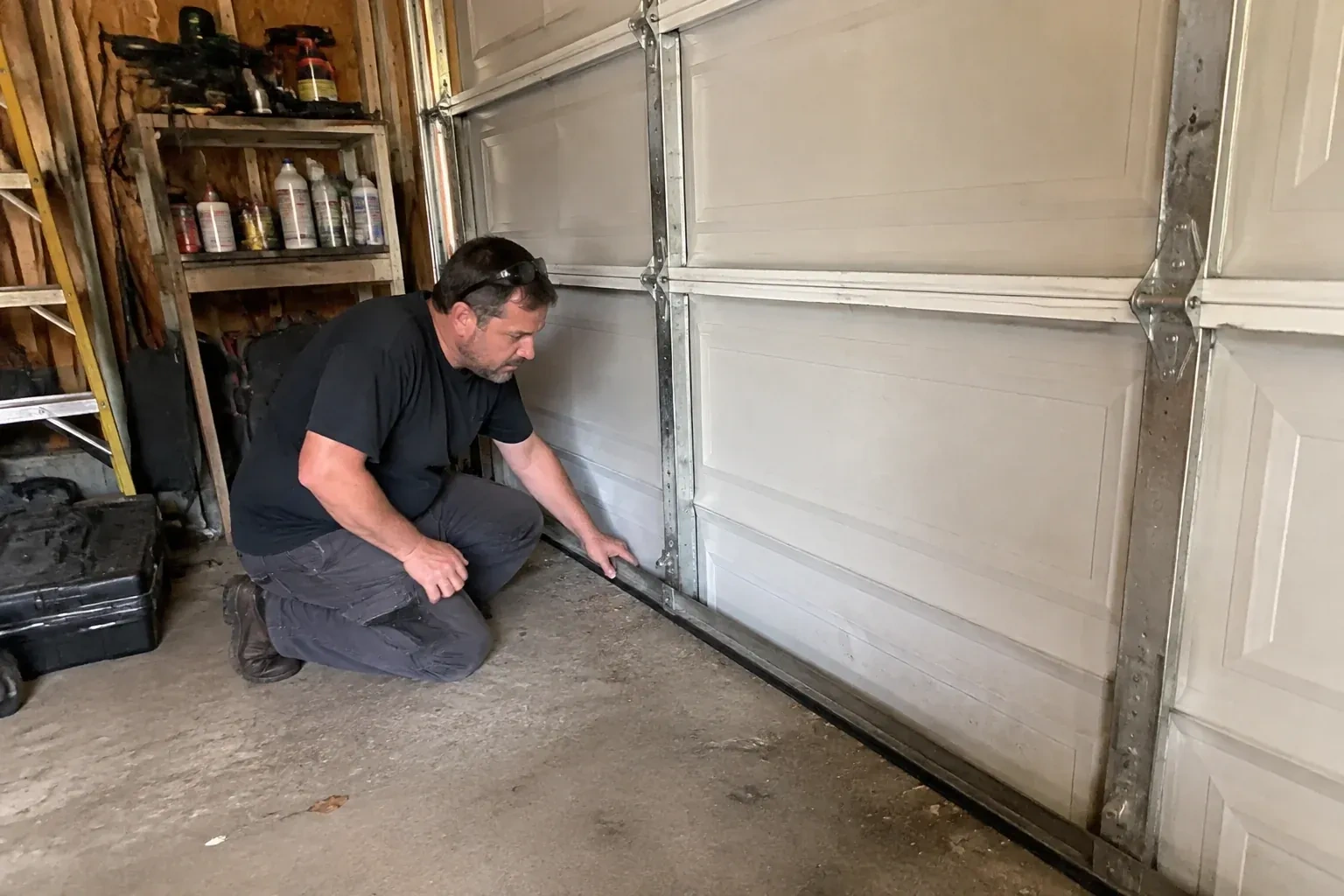
- Pressing a hand against one of the middle hinges makes it rock on the panel. The screws turn and turn without ever tightening, and there is a rattle from that spot every time the door settles onto the floor.
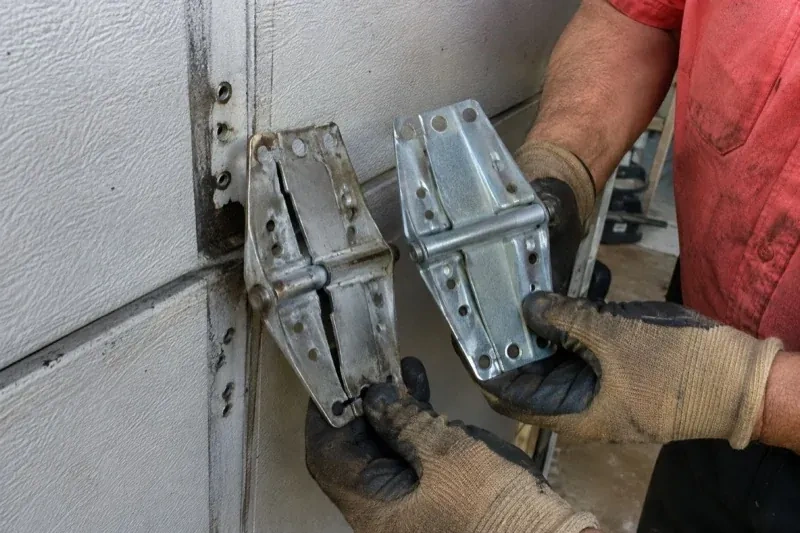
Hinges come in different thicknesses, and the visit is a chance to fit the right one. Steel gauge runs backwards: a larger number means thinner metal, so an 18-gauge hinge suits a light single door while 14-gauge is the heavier residential standard and 11-gauge is commercial stock. A heavy insulated double door, a door used many times a day, or a door whose hinges keep cracking at the knuckle benefits from moving up a gauge. The technician also checks that the hinge width and hole pattern match the door's stiles, since patterns vary between makers. You leave with hinges suited to the door's weight.
Sound familiar?Bridgeport
Garage Door Hinge Replacement · Bridgeport
Scene 1
A hinge only holds if its fasteners do. The technician tests each screw for grip and looks at the stile it threads into: the folded steel channel at the panel edge on a steel door, the hinge support plate behind the skin where one is fitted, or the solid timber of a wood door. Holes that have stretched, rusted or torn are noted, because a new hinge on a stripped hole rocks just like the old one. Where the metal is thin or the wood is soft, the plan changes from screws to a through-bolt with a nut and washer, or a backer plate that spreads the load across fresh material.
Scene 2
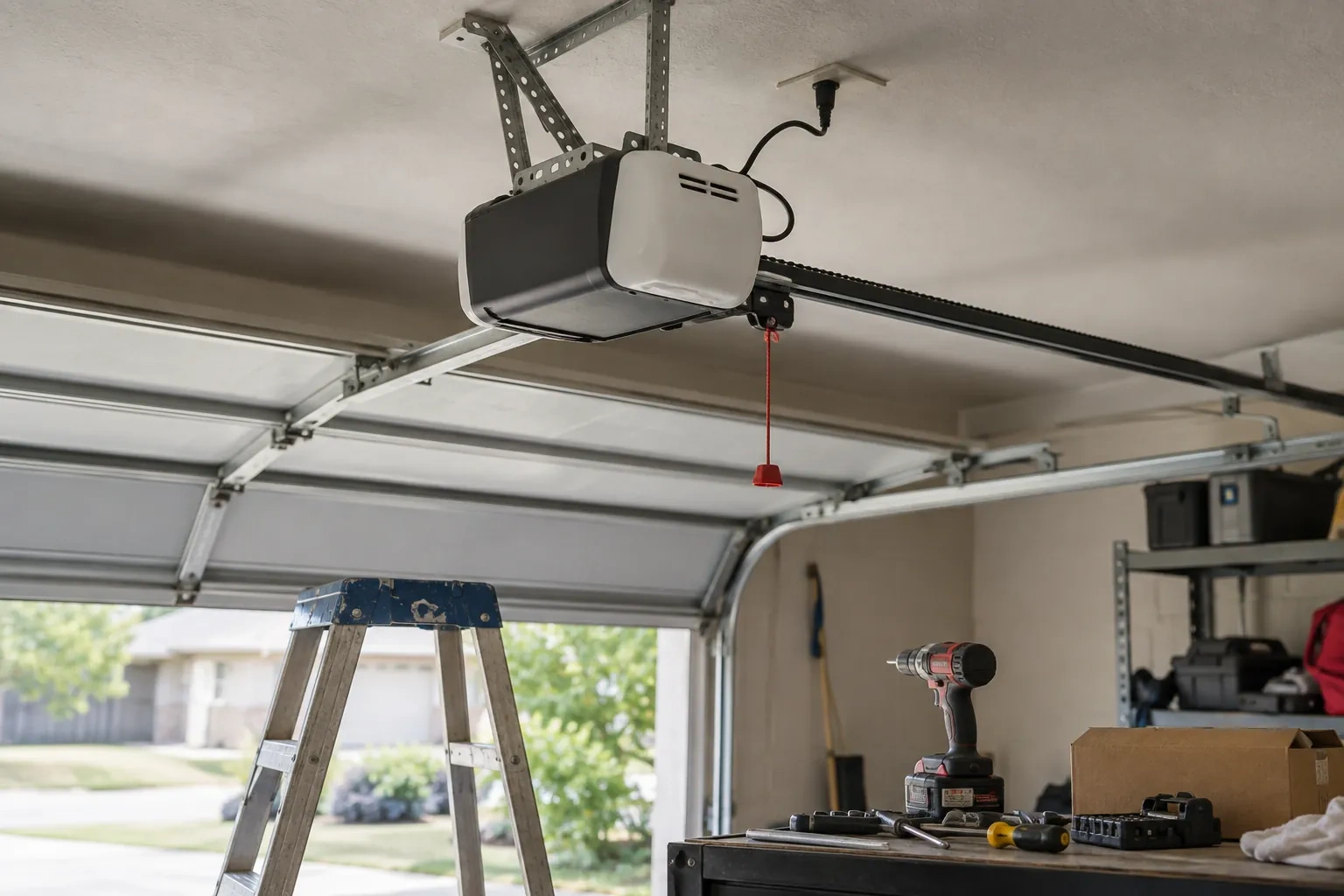
Once every hinge is on, the door is run by hand. The technician watches each joint turn the curve, listening for the pop that started the call and looking for a gap opening between panels. The door is closed and checked for an even fit against both jambs, then raised to waist height and let go: a balanced door stays put, which confirms the hinge work has not disturbed the springs' job. Rollers are watched for staying flat in the track. Then the opener is reconnected, its travel limits confirmed, and the reversing test and photo-eye check carried out while you watch.
Scene 3
The maintenance checklist the door industry publishes asks homeowners to check hinges, brackets and fasteners visually from inside with the door closed, once a month. Stand where you can see both ends of the door and follow each joint with a flashlight: a screw head that stands proud, a hinge leaf lifted off the panel, a fresh crack spreading from a hole, or a rust stain running down from a knuckle. Then watch the door open and confirm the rollers stay in the track. Anything you spot is a small job at that stage. The whole check takes about a minute.
What shapes the quoteBridgeport Garage Door Experts
FeesSame any hour
A noise at a fixed height points at the joint passing through the curve at that moment. A cracked hinge leaf flexing open and snapping back, a pin rocking in a worn hole, or a roller stem shifting in a loose hinge all make a sharp report as the load transfers. Because it always happens at one place, the technician can go straight to that joint and usually finds the hinge or roller responsible.
Hinge replacement leaves the springs untouched, since the door stays closed and the counterbalance is not unloaded. Balance is checked at the end all the same, because a door the opener has to drag is one of the main reasons hinges fail early. If the door drifts up or sinks when lifted by hand and released, the technician explains the spring adjustment needed and offers it as its own decision.
Count the joints between panels and multiply. A single door usually carries two edge hinges and one centre hinge per joint, so a four-panel door has three joints and nine hinges. A double door adds one or two more centre hinges per joint to keep the wider panels flat. The top panel uses adjustable top fixtures rather than hinges, and the bottom corners use bottom brackets, which are different parts.
WaterlooOntario
Garage Door Hinge Replacement · Kitchener, Heritage Park, Rosemount, Stanley Park
Every square is one home in a hundred.
On-site assessment
On the old wood door, one hinge has pulled away from the panel, dragging a screw and a chunk of soft timber with it.
(226) 806-0514, open 24/7.
On-site assessment preferred · (226) 806-0514, open 24/7