Bridgeport Garage Door ExpertsBulletin 1 of 3Kitchener, Ontario
Extension Spring Replacement: inside the visit
Extension springs are common on the detached garages behind older houses, where a low ceiling left no room for a torsion shaft, and those garages are rarely heated.
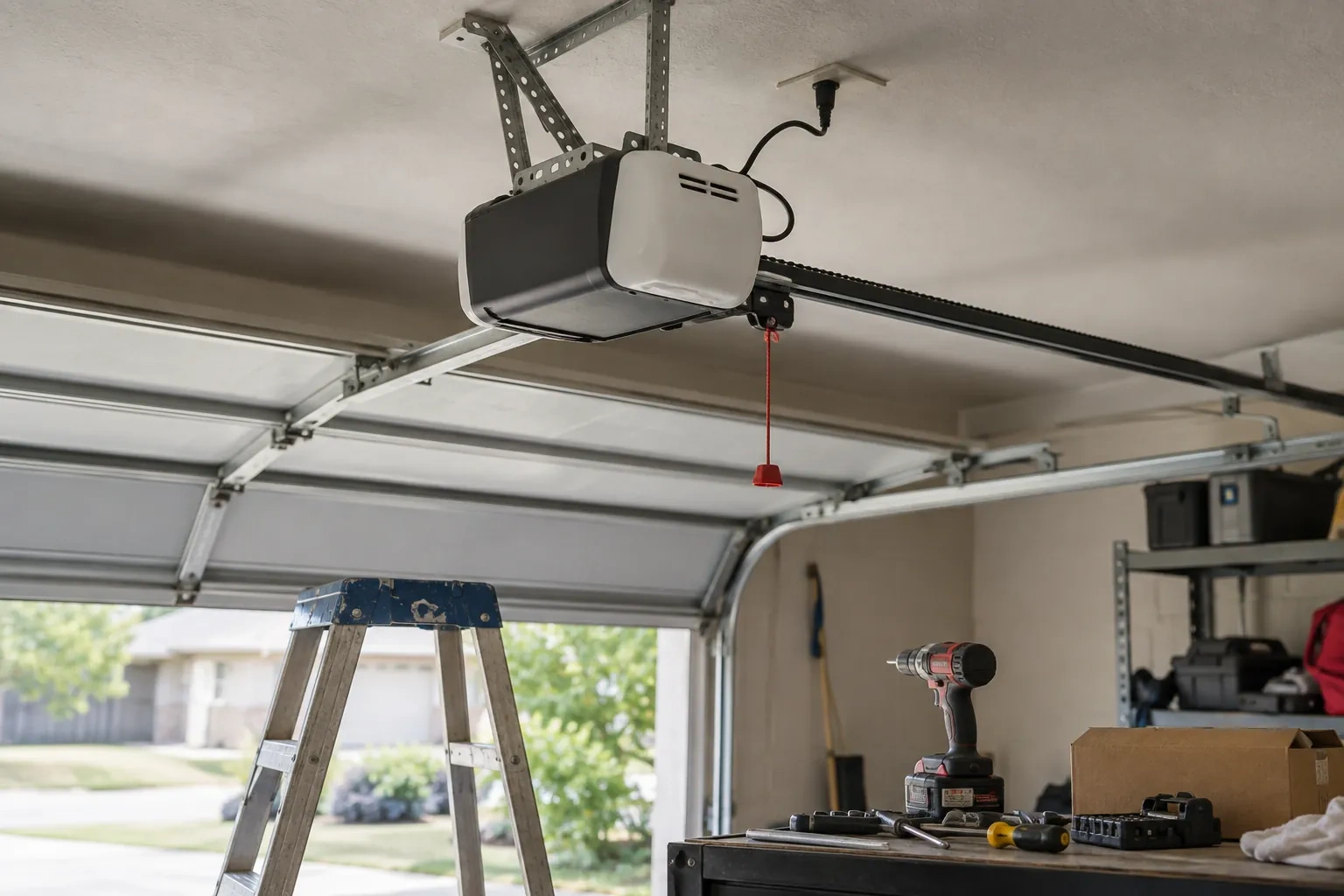
Extension springs are common on the detached garages behind older houses, where a low ceiling left no room for a torsion shaft, and those garages are rarely heated. Damp summers, hard frosts and salt carried in on the car pit the spring wire over the years, and a fatigued spring most often lets go on a cold morning when the steel is stiffest. Replacement fits a new pair rated for the door, renews the pulleys and cables that have rusted alongside them, adds containment cables where the original installation never had any, and leaves a door that lifts easily by hand when the power is out.
Securing the door with the springs slack
An extension spring is stretched tight when the door is closed and nearly relaxed when the door is fully open, so the first move is to get the door up. The technician pulls the opener's release, raises the door by hand if it will go, and clamps both vertical tracks below the bottom rollers so the door cannot come down. If a broken spring has left the door stuck partway, it is lifted and supported with the weight taken on clamps and props before anything else is handled. With the door held open, the springs, pulleys and hooks can be examined and removed like ordinary hardware, which is the whole reason the sequence begins this way.
Fitting a pair that matches the door
The new springs are selected from the door's measured weight and its height, which together give the rating and the stretched length required, and they are fitted as a pair even if one old spring looked sound. The technician checks each new spring's wire size, coil diameter and relaxed length against the specification before it goes up, and confirms the end loops suit the hanger and the pulley fork. The rear loop is hung on the hanger and the front loop takes the pulley fork. On heavier doors that carry two springs per side, all four are renewed together. Nothing is hooked to the door yet; the springs simply hang in place, slack, waiting for the cables.
Knowing when the next set is due
A standard extension spring is made for a set number of open-and-close cycles, commonly in the ten-thousand range, which on a door used four times a day works out to several years and on a door used twice a week to much longer. Springs age even when idle, as rust does its slow work in an unheated garage. The signs that the set is nearing the end are gradual: the door feels heavier by hand, the opener sounds as if it is working, the door drifts down from halfway, and gaps appear between coils when the door is open. Acting on those signs turns the next replacement into a planned appointment rather than a bang in the night.